


 English
Heat stress in dairy cows and THI
Heat stress occurs when a cow cannot shed excess body heat in hot, humid weather. As the THI (temperature-humidity index), which combines temperature and humidity, rises, feed intake, milk yield and fertility fall. Shade, ventilation, cooling and plenty of clean water are the main ways to reduce heat stress.
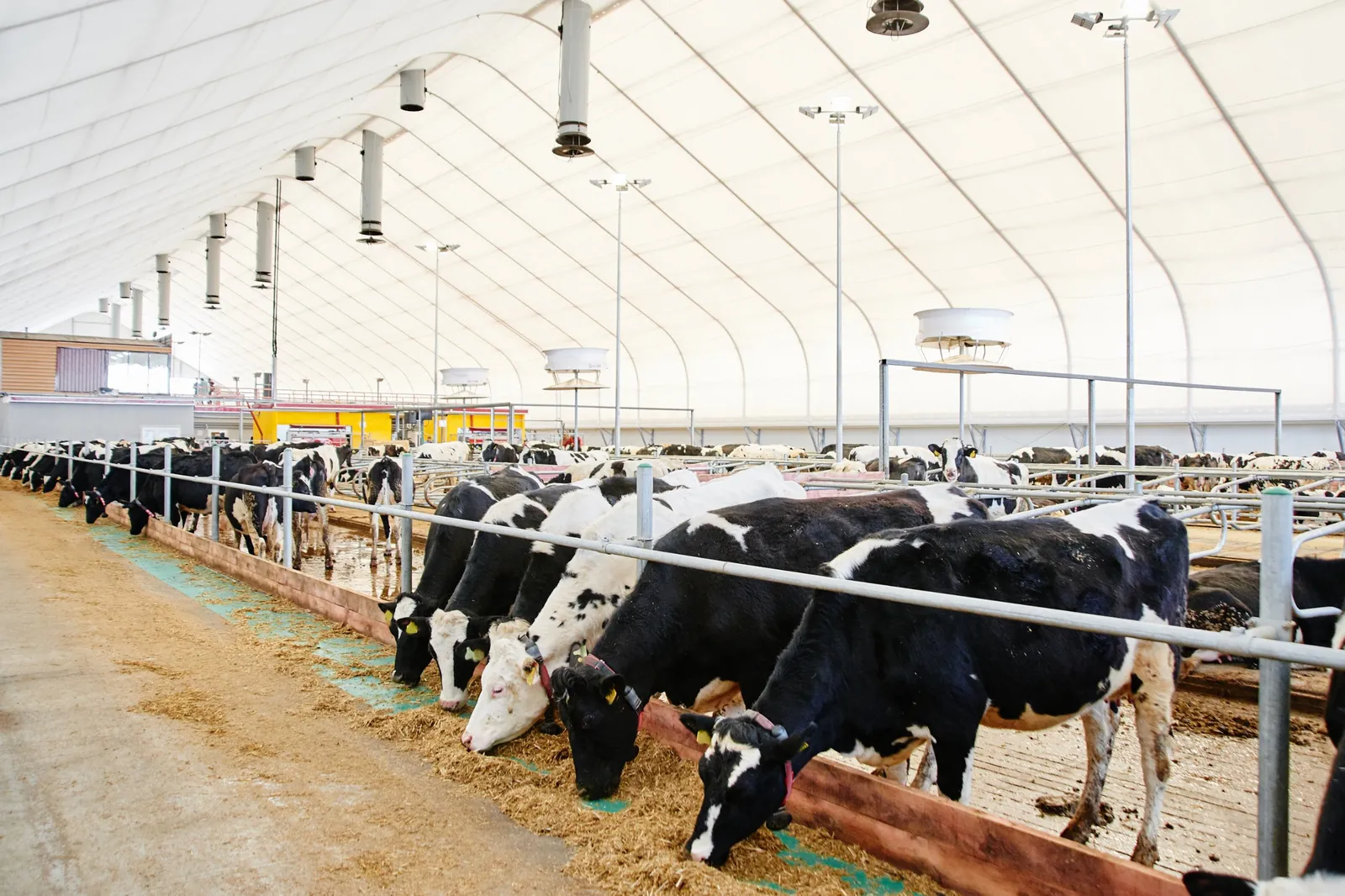
What is heat stress?
High-yielding dairy cows produce a lot of heat because of their metabolism. In hot, humid weather they struggle to shed this heat; their body temperature rises and they become heat-stressed. Heat stress is not limited to summer: it can also occur on mild days in poorly ventilated housed barns.
What is the THI (temperature-humidity index)?
The THI combines temperature and humidity into a single number that indicates the risk of heat stress. At the same temperature, the THI rises as humidity increases. For dairy cows, it is commonly accepted that signs of heat stress begin from a THI of about 68–72; the higher the value, the more severe the effects.
Signs of heat stress
- Rapid, open-mouthed breathing
- Reduced feed intake and rumination
- Increased water intake
- Crowding in the shade and around water troughs, standing
- Rising body temperature
Effects on milk yield and fertility
A heat-stressed cow eats less, and as a result her milk yield falls. Signs of heat (oestrus) weaken and conception rates drop. The effects can persist for some time after the weather cools.
How to prevent heat stress
- Shade and a well-insulated roof
- Ventilation and fans
- Cooling: Sprinkler or soaker systems combined with fans
- Plenty of clean water: Add more easily accessible water troughs
- Feeding routine: Feed during the cooler hours of the day
Consult your animal nutritionist and veterinarian about ration adjustments.
Measuring heat stress
Barn temperature and humidity give the THI; the cow’s body temperature shows how much the animal is affected by these conditions. The Edell Biosense rumen bolus shows rises in body temperature, while Edell Climate environmental sensors are being developed to monitor barn temperature, humidity and air quality in the same app.
Frequently asked questions
At what THI does heat stress start in dairy cows?
It is commonly accepted that signs of heat stress begin from a THI of about 68–72.
Does heat stress reduce milk yield?
Yes. Because feed intake falls, milk yield drops; fertility is also negatively affected.
How can heat stress be prevented?
Shade, ventilation, fans and sprinklers, plenty of clean water and feeding during the cooler hours are the main measures.
For a free assessment, send us your herd size and country on WhatsApp.